Category: Railway Emblems

  • The Emblem of the Dholpur State Railway: A Royal Symbol on One of India’s Most Remarkable Narrow-Gauge Railways

    The Emblem of the Dholpur State Railway: A Royal Symbol on One of India’s Most Remarkable Narrow-Gauge Railways

    Among India’s numerous princely state railways, the Dholpur State Railway (DSR) occupied a unique place in railway history. Though relatively modest in size, it earned an enduring reputation for its efficient operations, distinctive narrow-gauge network, and rugged steam locomotives that served the Chambal region for more than a century. Complementing this identity was the railway’s official emblem—an insignia that reflected the authority of the rulers of Dholpur while symbolising the state’s aspirations for modernisation.

    Unlike the elaborate heraldic emblems of larger princely states such as Mewar or Mysore, the Dholpur State Railway’s symbol was characterised by simplicity and practicality. Yet behind its understated appearance lay a rich story of royal patronage, administrative pride, and the unique identity of one of India’s last surviving princely railways.


    The Birth of the Dholpur State Railway

    The princely State of Dholpur, located between Agra and Gwalior, was ruled by the Jat Bamraulia dynasty. Although one of the smaller princely states, Dholpur occupied a strategically important position along the trade routes linking northern and central India.

    Recognising the economic value of rail transport, Maharaja Ram Singh and his successors supported the construction of a state-owned railway. The first section, connecting Dholpur and Bari, opened in 1908 as a 2 ft 6 in (762 mm) narrow-gauge line. Over the following decades, the network expanded to serve Rajakhera, Sarmathura, and nearby areas, transporting agricultural produce, sandstone, timber, passengers, and military supplies.

    The railway remained under the ownership and administration of the Dholpur State until the political integration of princely states after Independence, after which it became part of Indian Railways.

    Dholpur State Railway
    A Glimpse of Dholpur State Railway Post Independence

    The Origin of the Railway Emblem

    Like many princely railways, the Dholpur State Railway did not develop a completely independent logo. Instead, it adopted elements from the Royal Coat of Arms of the State of Dholpur, thereby projecting the authority of the Maharaja on every locomotive, carriage, station seal, and official document.

    This practice reflected the administrative philosophy of princely India: the railway was not merely a transport undertaking but an extension of the ruler’s government. By displaying the royal emblem, the railway reminded passengers and employees alike that they were travelling on a system established and maintained by the State of Dholpur.

    The Design of the Emblem

    The emblem used by the Dholpur State Railway was derived from the heraldic traditions of the Dholpur royal house. While minor artistic variations appeared over time, its principal elements remained consistent.

    The Emblem of Dholpur State Railway

    The Royal Shield

    At the centre stood a shield representing the sovereignty and authority of the princely state.

    The shield symbolised:

    • the protection offered by the Maharaja,
    • the stability of the state,
    • and the continuity of governance.

    For railway passengers, it conveyed confidence that the railway was operated under royal supervision rather than by a private company.

    Martial Symbols

    The coat of arms incorporated traditional martial motifs associated with Rajput and Jat military heritage. Depending on the artistic rendition, these included:

    • crossed swords,
    • spears,
    • lances,
    • banners,
    • and ceremonial weapons.

    These reflected the martial traditions of the ruling family, who had served both regional powers and later the British Crown while maintaining the autonomy of their state.

    The Royal Crown

    The emblem was surmounted by the Maharaja’s crown, signifying sovereign authority within the princely state.

    Unlike British imperial insignia, the crown represented indigenous kingship and reminded observers that Dholpur retained internal self-government under British paramountcy.

    Motto and Decorative Scroll

    Some official versions of the state arms featured decorative scrollwork and a royal motto beneath the shield. Although the exact wording varied in ceremonial representations, the scroll symbolised ideals such as loyalty, honour, and just governance—qualities the railway administration sought to embody.

    Why Did the Railway Use the State Emblem?

    The decision to adopt the royal coat of arms was both symbolic and practical.

    A Visible Expression of Royal Patronage

    The railway was financed, owned, and administered by the Dholpur State. Displaying the royal insignia reinforced that the railway was an official institution serving the interests of the Maharaja and his subjects.

    Building Public Confidence

    In the early twentieth century, rail travel represented modern technology for many rural communities. The familiar state emblem reassured travellers that the railway enjoyed the direct support of the ruling house and adhered to standards expected of a state institution.

    Distinguishing the Railway

    Neighbouring regions were served by major systems such as the Great Indian Peninsula Railway, the Bombay, Baroda and Central India Railway, and the Gwalior Light Railway. The Dholpur emblem gave its railway a distinctive identity, setting it apart despite its comparatively small size.

    The Emblem in Everyday Railway Life

    The royal insignia appeared on:

    • steam locomotives,
    • passenger coaches,
    • goods wagons,
    • station seals,
    • official correspondence,
    • engineering drawings,
    • employee badges,
    • and ceremonial publications.

    For railway staff, the emblem served much the same purpose as a regimental badge, fostering loyalty and institutional pride.

    The Symbol and the Railway’s Identity

    Although the Dholpur State Railway was not among the largest princely systems, its emblem became synonymous with reliability and local service.

    The railway was especially important because it connected remote rural communities with markets and administrative centres. Farmers used it to transport grain, sugarcane, and livestock, while the famous Dholpur red sandstone—used in many prestigious buildings across India—also travelled over its tracks.

    As a result, the emblem came to represent more than royal authority; it became associated with economic opportunity and regional development.

    The Sandstone Railway

    There is one interesting aspect of Dholpur State Railway which I wanted to Highlight here although not associated with the symbol of Dholpur State Railway. Dholpur’s quarries produced one of India’s finest red sandstones, widely used in public buildings during the British period, including parts of New Delhi designed by Sir Edwin Lutyens. The railway played a crucial role in transporting this stone to the broad-gauge network for onward distribution.

    Also Dholpur State Railway was among the last narrow-gauge systems in India where steam locomotives remained a familiar sight well into the late twentieth century. These engines, carrying the state’s insignia, became icons for railway enthusiasts and photographers from around the world.

    Because the Dholpur State Railway network survived with much of its original character for decades after Independence, the Dholpur State Railway became a favourite subject for historians. Photographs of locomotives displaying the royal emblem continue to appear in books, museums, and private collections.

    Comparison with Other Princely Railway Symbols

    Unlike the richly symbolic solar emblem of the Mewar State Railway or the elaborate heraldry of Mysore State Railways, the Dholpur State Railway’s insignia reflected the modest scale of its parent state. Its design emphasised authority, discipline, and royal patronage rather than ancient dynastic mythology.

    This simplicity mirrored the character of the railway itself—practical, dependable, and closely connected to the everyday lives of the people it served.

    The End of the Dholpur State Railway

    Following Independence, Dholpur acceded to the Indian Union in 1948. The railway subsequently came under the management of Indian Railways, and its separate royal identity gradually disappeared. The emblem was replaced by the insignia of the national railway system.

    Large sections of the historic narrow-gauge network have since been converted or closed, although a few surviving artefacts and locomotives remain valuable reminders of the railway’s heritage.

    Legacy: More Than a Royal Badge

    The emblem of the Dholpur State Railway represented the values of a princely state that embraced technological progress while retaining its own identity. Though modest in appearance, it stood for royal responsibility, public service, and the ambition to connect a relatively small kingdom with the wider world.

    For generations of railway employees and passengers, the emblem symbolised dependable transport, economic growth, and the pride of belonging to a state-owned institution. Today, preserved locomotives, archival photographs, and official documents bearing the insignia continue to tell the story of one of India’s most distinctive narrow-gauge railways.

    Although the Dholpur State Railway no longer exists as an independent entity, its emblem remains a powerful reminder of an era when even a small princely state used railway symbolism to express its sovereignty, ambition, and commitment to the service of its people.
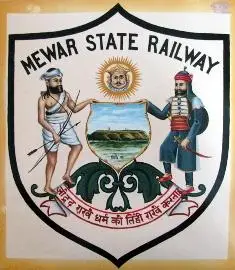
  • The Emblem of the Mewar State Railway: A Symbol of Pride, Heritage and Royal Vision

    The Emblem of the Mewar State Railway: A Symbol of Pride, Heritage and Royal Vision

    Among the many princely state railways that once criss-crossed the Indian subcontinent, the Mewar State Railway possessed one of the most distinctive identities. Long before corporate branding became an integral part of rail transport, the rulers of Mewar understood the importance of symbolism. Their railway emblem was far more than a decorative crest—it was a visual declaration of sovereignty, heritage, and the enduring legacy of the House of Sisodia.

    Today, while locomotives bearing the emblem have long disappeared and the Mewar State Railway itself has become part of Indian Railways, its symbol remains an important reminder of how princely states sought to project their identity through modern infrastructure.

    Railways in the Kingdom of Mewar

    The princely state of Mewar, with its capital at Udaipur, was among the most respected Rajput kingdoms in India. Ruled by the Sisodia dynasty, the state enjoyed a reputation for courage, independence and resistance against foreign domination.

    Recognising the transformative power of railways in the late nineteenth century, Maharana Fateh Singh initiated the development of a state-owned railway network. Construction began in the 1890s, and the first sections opened towards the end of the decade. The railway connected Udaipur with Chittorgarh and eventually linked the kingdom with the broader Rajputana-Malwa railway system.

    Unlike many princely states that simply relied upon British-operated railways, Mewar consciously developed its own railway administration, complete with its own insignia and visual identity.

    The Origin of the Railway Emblem

    The emblem adopted by the Mewar State Railway was derived directly from the Royal Coat of Arms of the Kingdom of Mewar.

    Rather than creating an entirely new logo, the railway administration chose to employ the state’s traditional royal symbolism. This decision reflected a deliberate message:

    • the railway belonged to the Maharana,
    • it served the people of Mewar,
    • and it represented the authority of one of India’s oldest ruling dynasties.

    This was common among princely railways, where railway insignia often mirrored royal coats of arms, reinforcing the idea that the railway was an extension of the ruler’s governance.

    Symbol of Coat of Arms of Mewar State

    The Design of the Emblem

    Although variations existed over time, the emblem generally incorporated several characteristic elements of the Mewar royal arms.

    The Sun Symbol

    The most prominent feature was the radiant Sun (Surya).

    The Sisodia rulers claimed descent from the legendary Suryavanshi (Solar) Dynasty, tracing their lineage to Lord Rama through the Ikshvaku dynasty.

    For centuries, the Sun had served as the principal emblem of the House of Mewar. It represented:

    • divine legitimacy,
    • continuity of rule,
    • courage,
    • truth,
    • and eternal sovereignty.

    Its inclusion on railway locomotives symbolised that every train operated under the authority and protection of the Maharana.

    Rajput Martial Tradition

    Many versions of the royal arms also incorporated martial imagery associated with Rajput culture.

    These included:

    • shields,
    • spears,
    • swords,
    • ceremonial weapons,
    • royal banners,
    • and occasionally traditional Rajput supporters.

    These elements reminded viewers that the rulers of Mewar were celebrated not merely as administrators but as defenders of their homeland.

    The railway thus became a symbol not only of technological progress but also of Rajput honour.

    Royal Crown and Crest

    The crest often carried the royal crown or ceremonial insignia representing the sovereignty of the Maharana.

    Unlike British imperial crowns, these reflected indigenous Rajput kingship, emphasising that Mewar remained an internally autonomous princely state despite British paramountcy.

    The Symbol of Mewar State Railway

    Why Was Such an Emblem Necessary?

    During the late nineteenth century, railways were among the most visible symbols of modern governance.

    Every locomotive travelling through villages and towns acted as a moving ambassador of the state.

    The emblem therefore served several purposes.

    Assertion of Sovereignty

    Although Mewar accepted British suzerainty, it retained considerable internal autonomy. Displaying the royal arms on railway property reminded passengers and officials alike that the railway belonged to the Maharana rather than directly to the British Government.

    Public Confidence

    For local residents, the familiar royal symbol inspired trust. The emblem reassured people that the railway was an institution backed by the state and operated under royal patronage.

    Administrative Identity

    The emblem distinguished Mewar State Railway from neighbouring systems such as:

    • Rajputana-Malwa Railway,
    • Bombay, Baroda and Central India Railway,
    • Jaipur State Railway,
    • Jodhpur Railway.

    Each princely railway sought its own visual identity, and the Mewar emblem provided immediate recognition.

    The Symbol on Rolling Stock

    Historical photographs show the emblem displayed on:

    • steam locomotives,
    • carriage sides,
    • station name boards,
    • official stationery,
    • administrative documents,
    • engineering equipment,
    • railway seals,
    • ceremonial publications.

    The royal insignia functioned much like today’s railway logos. Passengers could immediately identify a train belonging to the Mewar State Railway.

    A Reflection of Rajput Values

    Perhaps the most remarkable aspect of the emblem was how successfully it combined tradition with modernity.

    The railway represented industrial technology imported from Europe.

    The emblem represented centuries-old Rajput civilisation.

    Together they conveyed an important message:

    Modern progress need not come at the cost of cultural identity.

    This philosophy became one of the defining characteristics of many princely state railways.

    Comparison with Other Princely Railway Symbols

    Several princely railways adopted heraldic devices based on their ruling houses, but the Mewar emblem stood apart because of its deep historical lineage. Unlike newer states that adopted European-style heraldry, the Mewar emblem drew upon symbols that had represented the Sisodia dynasty for centuries. The radiant Sun was instantly recognisable and deeply rooted in Rajput tradition, giving the railway an identity that was both unmistakable and historically authentic.

    The End of the Mewar State Railway

    Following Indian Independence in 1947 and the integration of princely states, the Mewar State Railway was gradually merged into the national railway system.

    Its separate administration disappeared, and the royal insignia was replaced by the emblems of the newly formed Indian Railways.

    Yet the memory of the emblem survives in:

    • preserved photographs,
    • archival documents,
    • railway correspondence,
    • collectors’ memorabilia,
    • and the heritage of Rajasthan’s railway history.

    Legacy: More Than a Logo

    The emblem of the Mewar State Railway was much more than a decorative badge. It embodied the values of a kingdom that balanced ancient traditions with the demands of modern governance. By adopting the royal arms, the railway projected continuity, legitimacy and regional pride, distinguishing itself from neighbouring systems and strengthening public confidence in a transformative new mode of transport.

    Today, the emblem stands as a reminder that railways were not merely engineering achievements; they were also powerful expressions of identity. For the people of Mewar, every locomotive carrying the radiant Sun symbol represented the enduring spirit of the Sisodia dynasty—a dynasty that embraced the future without relinquishing its heritage.

    The emblem helped shape the Mewar railway’s identity in several lasting ways:

    • It reinforced royal ownership, making the railway a visible extension of the Maharana’s administration.
    • It cultivated public trust, as the familiar solar emblem conveyed continuity, stability and state patronage.
    • It distinguished the railway from neighbouring systems, giving Mewar a unique visual identity within the diverse network of princely and British-operated railways.
    • It united employees under a shared symbol, fostering loyalty and pride in serving a railway associated with one of India’s oldest royal houses.
    • It preserved cultural continuity, demonstrating that technological progress and Rajput heritage could coexist harmoniously.

    In an era before standardised corporate branding, the Mewar State Railway’s emblem achieved what modern logos aspire to do: it instantly communicated the values, history and aspirations of the institution it represented. More than a century later, it remains one of the most evocative symbols in the story of India’s princely state railways.

  • Logos of Erstwhile State Railways of India

    “Every railway has a history. Every logo has a story.”

    During one of my visits to the Indian Railways Institute of Civil Engineering (IRICEN), Pune in 2019, I came across a display that instantly captivated my attention. Mounted on a beautifully crafted wooden panel were the emblems of several railway companies that once operated across the Indian subcontinent during the British era. At first glance, the collection appeared to be an artistic arrangement of colourful brass medallions. However, as I spent more time observing them, I realised that these were far more than decorative designs. They were the visual identities of the railway companies that laid the foundations of the railway network we know today as Indian Railways.

    Each emblem represented a distinct railway company with its own history, administration, engineering achievements, culture and legacy. Some belonged to British-owned companies, others represented princely states that built and operated their own railways, while a few were associated with private enterprises established for commercial purposes. Together, these emblems narrate the fascinating story of railway development in India during the nineteenth and early twentieth centuries.

    While locomotives, stations and engineering marvels have received considerable attention from historians and railway enthusiasts, the heraldry and symbolism of these railway companies remain one of the least explored aspects of India’s railway heritage. This article is an attempt to introduce readers to that forgotten world before we embark on a detailed journey through each of these remarkable emblems.

    Before There Was Indian Railways

    Today, the words “Indian Railways” immediately bring to mind a single organisation operating one of the world’s largest railway networks. Yet this unified identity is relatively recent.

    Before Independence, the railway system of the Indian subcontinent consisted of numerous independent railway companies. Rather than one central administration, there existed more than forty railway systems, each functioning almost as an independent organisation. Some were owned by the British Government, some were financed and managed by private companies, while several belonged to the princely states that ruled nearly one-third of the Indian subcontinent.

    Every railway possessed its own headquarters, engineering department, workshops, rolling stock, employee uniforms, ticketing system, operating practices and official emblem. Much like modern corporations, these companies cultivated their own identities, and their logos became symbols of authority, reliability and prestige.

    Following Independence, these individual systems were gradually integrated into a single national organisation. Although the companies disappeared, their emblems remain as enduring reminders of the diverse origins of Indian Railways.

    The Birth of Railway Heraldry in India

    The railway logos of British India were not merely decorative designs. Most of them were inspired by the European tradition of heraldry, an artistic practice dating back to medieval Europe where kings, noble families and military orders used coats of arms to establish identity and authority.

    As the railway revolution spread across the British Empire during the nineteenth century, many railway companies adopted heraldic principles for their official emblems. These designs conveyed dignity, permanence and institutional pride.

    Indian railway companies followed the same tradition. The result was a fascinating collection of emblems that blended British heraldic conventions with Indian history, geography and culture. Many logos featured royal crowns, shields, lions, elephants, horses, railway wheels, mountains, forts, temples, rising suns and other symbolic elements. Each component carried a deeper meaning and reflected the character of the railway it represented. These emblems were not random artistic creations; they were carefully designed visual narratives.

    The Three Faces of Railways in India

    The railway companies represented in this collection can broadly be divided into three categories.

    The first were the Government Railways, such as the Great Indian Peninsula Railway, East Indian Railway, Bengal Nagpur Railway and North Western Railway. These companies built many of the principal trunk routes that connected India’s major cities and ports. Their logos generally reflected the corporate traditions of Victorian Britain, emphasising engineering excellence, commercial enterprise and administrative authority.

    The second category comprised the Princely State Railways. These included railways established by Indian rulers such as the Mysore State Railway, Gaekwar’s Baroda State Railway, Gondal State Railway, Junagadh State Railway, Morvi State Railway, Jaipur State Railway, Bhavnagar State Railway and Nizam’s State Railway. These rulers viewed railways as symbols of progress and prosperity. Consequently, many adopted their royal coats of arms as railway emblems, incorporating traditional symbols that reflected their dynastic heritage.

    The third category consisted of privately owned railway companies established to serve commercial interests. Railways such as Martin’s Light Railways, Bengal Dooars Railway and Assam Bengal Railway were primarily built to transport agricultural produce, tea, timber and other commodities. Their logos often reflected the landscapes and industries that shaped their existence.

    More Than Mere Logos

    In the modern world, logos are often regarded as tools of marketing. During the nineteenth century, however, railway emblems served a far broader purpose.

    A railway logo represented ownership, authority and public trust. It appeared on locomotives, passenger coaches, station signboards, official correspondence, engineering drawings, employee badges, seals, tickets and ceremonial presentations. For passengers, the emblem identified the railway company operating the train. For employees, it represented loyalty and professional pride. For princely rulers, it reflected prestige and progressive governance. For British administrators, it symbolised engineering capability and commercial success. In many respects, these emblems performed the same function as national flags, instantly conveying identity and authority.

    The Language of Symbols

    One of the most fascinating aspects of studying these logos is understanding the symbolism hidden within them.

    The lion often represented courage, sovereignty and strength. The elephant symbolised royal authority, wisdom and stability. The horse reflected speed, military tradition and mobility. The railway wheel represented industrial progress and technological advancement. Mountains signified engineering achievements in difficult terrain, as seen in the emblem of the Darjeeling Himalayan Railway. Forts and palaces reflected regional history and royal patronage.

    The legendary Gandaberunda, the mythical double-headed eagle of the Wadiyar dynasty, became the defining symbol of the Mysore State Railway. The royal insignia of the Gaekwad rulers formed the basis of the emblem of the Gaekwar’s Baroda State Railway. Every detail carried meaning, making each logo a miniature historical document.

    When Railways Became Symbols of Progress

    During the nineteenth century, constructing a railway was far more than an infrastructure project. It was regarded as a symbol of economic development, administrative efficiency and political prestige.

    Many princely rulers actively competed to establish railway networks within their territories. Possessing an independent railway demonstrated that a state embraced modern technology and progressive governance. Naturally, these rulers wanted their railway to reflect their own identity. Their official coats of arms, state emblems and royal insignia were therefore incorporated into the logos of their railway companies. Similarly, British-owned railway companies adopted sophisticated monograms and heraldic devices that reflected the values of the Industrial Revolution and the expanding British Empire.

    Thus, every logo became a visual statement of ambition.

    The End of an Era

    Following India’s Independence in 1947, the Government of India inherited a fragmented railway network consisting of numerous independent companies.

    To improve administration and operational efficiency, these companies were gradually integrated into a unified national railway system between 1951 and 1952. As a consequence, the individual identities of the old railway companies slowly disappeared. Their logos vanished from locomotives, stations, offices and official documents. In their place emerged the now-familiar emblem of Indian Railways, symbolising one railway serving one nation. Although the old companies ceased to exist, their contributions remain embedded within the modern railway network.

    Why These Logos Deserve to Be Remembered

    Today, railway heritage is often associated with steam locomotives, historic stations and engineering landmarks. Yet the logos of the railway companies deserve equal recognition. Each emblem tells a story of vision, ambition and innovation. Together they illustrate the political geography of pre-Independence India, the aspirations of princely rulers, the engineering achievements of British railway companies and the commercial enterprise that transformed transportation across the subcontinent. Studying these emblems is therefore much more than appreciating graphic design. It is another way of understanding the evolution of Indian Railways itself. These forgotten symbols remind us that before there was one Indian Railways, there were many railways—each with its own identity, traditions and legacy.

    A New Journey Begins

    The photograph accompanying this article was taken during my visit to the Indian Railways Institute of Civil Engineering (IRICEN), Pune. The beautifully curated display of historic railway emblems inspired me to look beyond the locomotives and stations and explore a lesser-known dimension of railway heritage.

    This article marks the beginning of a new series dedicated to the heraldry of the railway companies of British India.

    In the forthcoming articles, I will be writing about each logo individually—its history, artistic design, symbolism, the railway it represented and the fascinating stories associated with it. Some logos are simple monograms, while others are elaborate coats of arms rich in symbolism. Together they form an extraordinary visual archive of India’s railway past.

    I hope this series encourages fellow railway enthusiasts, historians and students to appreciate these forgotten symbols, for they represent not only the identities of vanished railway companies but also the remarkable journey that ultimately gave birth to modern Indian Railways.